
 Español
  English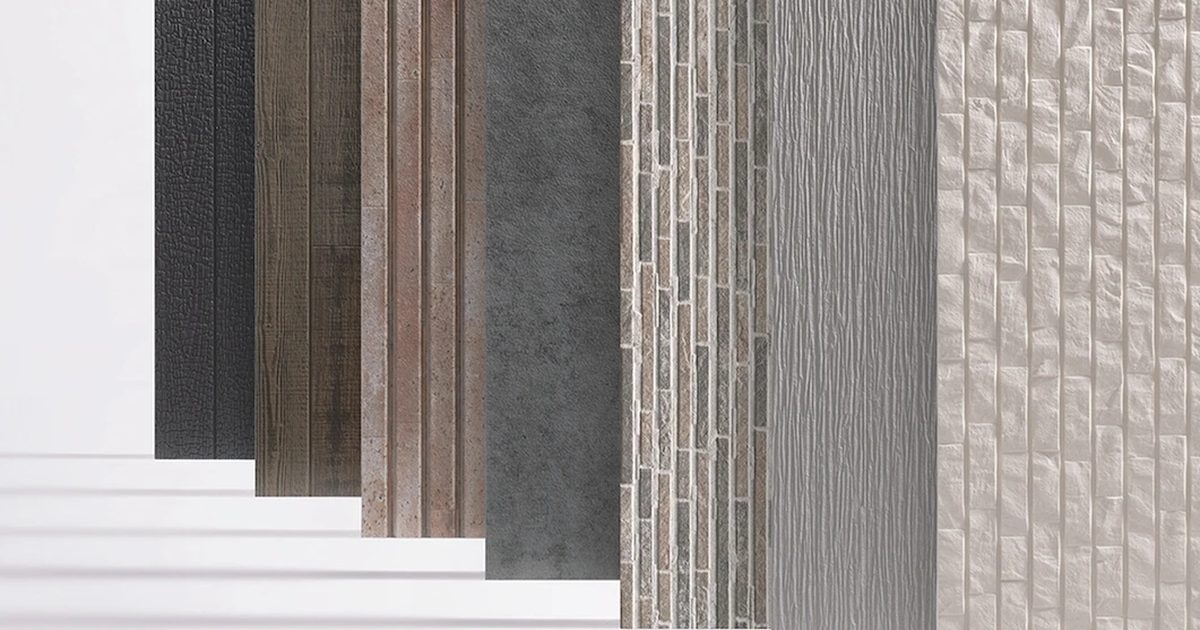
Filltect and Ceradir V belong to the same family of KMEW ventilated facades, share the same clip installation logic and can be installed horizontally or vertically. The main difference is not about deciding which one is “better”, but about understanding the project’s priority: architectural expression and photocatalytic surface technology, or a thinner solution aimed specifically at mid- and high-rise residential buildings.
1. Comparison at a glance
| Criterion | FILLTECT | CERADIR V |
|---|---|---|
| Main focus | Architectural expression, a variety of designs and advanced surface technology. | A thinner panel and a specific focus on multi-family residential and mid/high-rise buildings. |
| Format | 3030 × 455 mm. | 3000 × 455 mm. |
| European thickness | 16 mm according to the current European manual; the Optocera coating range is also presented in 16/18 mm on the KMEW product page. | 14 mm. |
| Coating | Photocatalytic ceramic. | Hydrophilic. |
| Surface cleaning | Light helps break down dirt; rain helps wash it away. | Rain works its way under the dirt and helps release and carry it away. |
| Colour protection | KMEW explicitly highlights resistance to colour loss thanks to the ceramic coating against UV. | The European page focuses on cleaning by rain, frost resistance and application at height. |
| Typical application | Housing, residential, modular, commercial and projects where the finish plays a leading role. | Multi-family housing, refurbishment and mid/high-rise buildings. |
| Installation | Horizontal or vertical. | Horizontal or vertical. |
| European documentation | ETA Filltect + EPD Filltect + manuals. | ETA Ceradir V14 + EPD Ceradir + manuals. |
2. FILLTECT: when design and surface take the lead
Filltect is the base material used in the European family with a photocatalytic ceramic coating. KMEW presents it as a range able to combine factory profiles and colours with a surface technology that acts on both dirt and UV radiation.
- Photocatalytic ceramic coating. Sunlight helps break down adhered dirt and rain helps remove it from the surface. This is the technology that sets Filltect apart.
- Resistance to colour loss. KMEW states that the ceramic coating protects against UV rays and uses inorganic paint resistant to deterioration. Particularly relevant on highly exposed facades.
- Design and relief. The KMEW range stands out for three-dimensional profiles and pre-finished colours that reproduce wood, brick, stone, stucco and linear patterns. A greater architectural presence.
- An additional photocatalytic function. KMEW also credits the photocatalytic coating with the ability to break down pollutants such as NOx and SOx.
3. CERADIR V: when height, lower thickness and refurbishment weigh more
Ceradir V is a 14 mm series developed by KMEW for multi-family housing and mid- and high-rise buildings. The European page explicitly notes its use on buildings up to 75 m and highlights its behaviour against frost.
- 14 mm. The lower thickness compared with Filltect reduces the volume of the cladding and can be of interest in refurbishment and in buildings where load and facade thickness are relevant variables.
- Hydrophilic coating. When it rains, water works its way under the dirt and helps separate it from the surface so it can be carried away.
- Mid- and high-rise. KMEW positions Ceradir V specifically for multi-family residential and mid/high-rise buildings.
- Developed for cold climates. Its base material was developed for cold regions and KMEW highlights its resistance to freeze damage.
4. Key difference no. 1: surface technology
| Aspect | FILLTECT | CERADIR V |
|---|---|---|
| Principle | Photocatalysis + a ceramic coating. | Hydrophilicity. |
| How it works | Light helps break down organic dirt; rain washes it away. | Water spreads and works its way under the dirt, helping it come loose. |
| UV / colour | KMEW highlights protection against colour loss from UV rays. | Not the main argument on the European Ceradir V page. |
| Architectural message | Surface technology plus maintenance of appearance. | Simplicity, cleaning by rain and climate resistance. |
5. Key difference no. 2: thickness and how the building is positioned
The current European manual specifies Filltect at 16 mm and Ceradir V at 14 mm. Although a 2 mm difference seems small, the Ceradir V series was conceived precisely with a clear orientation towards multi-family residential and mid/high-rise buildings.
For the architect this means Ceradir V should be looked at first when the project is a refurbishment, a residential block or a building of significant height. Filltect should be looked at first when the priority lies in a more expressive architectural range and in the photocatalytic technology of its finish.
| Installation | FILLTECT | CERADIR V |
|---|---|---|
| General system | Ventilated rainscreen + clips. | Ventilated rainscreen + clips. |
| Orientation | Horizontal or vertical. | Horizontal or vertical. |
| Standard clip | B1305 in the European manual. | B1205 in the European manual. |
| Clip fixing | According to the substrate/configuration in the manual. | The manual provides for two fixings per clip in the configurations indicated for Ceradir V. |
| Visual result | Concealed fixing across the main facade field. | Concealed fixing across the main facade field. |
6. Design: which catalogue should the architect open first?
| FILLTECT | CERADIR V |
|---|---|
Open FILLTECT first if…
|
Open CERADIR V first if…
|
7. What both series share
- They are KMEW panels for a ventilated facade system.
- They use concealed clip fixing across the main facade field.
- They can be installed horizontally or vertically, according to the design and the manual.
- They have specific European technical documentation.
- They are available in a variety of profiles and pre-finished colours.
- KMEW highlights frost resistance in both families.
8. Quick selector: choosing the series
| What is the priority? | Series to look at first | Why |
|---|---|---|
| Maximum expression of texture and relief | FILLTECT | A greater focus on the architectural finish plus the photocatalytic ceramic coating. |
| Colour protection / UV exposure | FILLTECT | KMEW explicitly highlights the protection of the ceramic coating against UV. |
| Single-family or modular housing where design leads | FILLTECT | A range particularly suited to projects where the facade image is central. |
| Refurbishment | CERADIR V | 14 mm and less demanding edge sealing according to the manual. |
| Multi-family residential | CERADIR V | A series positioned by KMEW specifically for multi-family housing. |
| Mid- and high-rise | CERADIR V | A series specific to mid/high-rise buildings; KMEW states application up to 75 m. |
| Cold climate / frost risk | BOTH | Both highlight resistance to freeze damage; Ceradir V was developed specifically for cold climates. |
| Not sure | Send project → | The choice has to consider height, substrate, exposure, design, modulation and documentation. |
9. Conclusion
Filltect and Ceradir V should not be presented as two equivalent versions with a different thickness. Each series answers a different priority.
Filltect is the natural choice where the project seeks a strong expression of material, a variety of relief and the technology of a photocatalytic ceramic coating with UV protection. Ceradir V is the series worth looking at first where refurbishment, multi-family residential, lower thickness and mid- or high-rise buildings weigh more.