
 Español
  English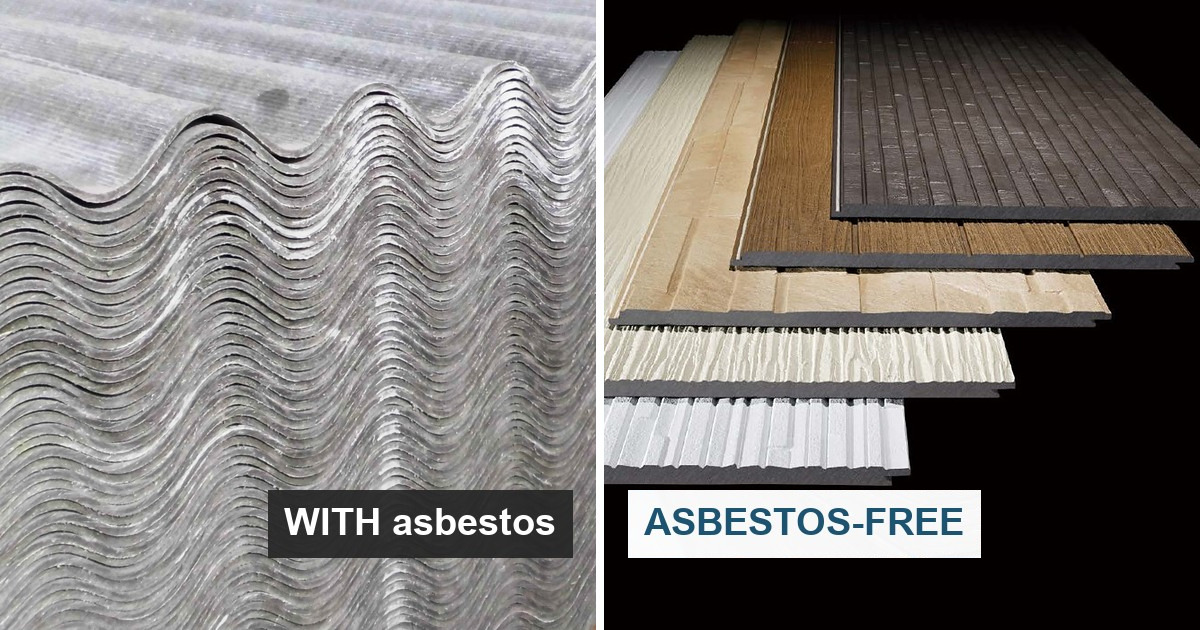
In Spain, the word fibrocemento (fiber cement) still triggers an immediate association with asbestos. That is understandable: for decades, sheets, pipes and other fiber cement elements containing asbestos fibers were manufactured and installed in Spanish buildings. Many of those old products are still in place today in roofs, party walls, facades and other parts of existing buildings.
That historical reality, however, does not make “fiber cement” a synonym for “asbestos”. Fiber cement is a family of cement-based materials reinforced with fibers. Asbestos was one of the fiber types used historically; modern fiber cement uses asbestos-free reinforcement solutions and is subject to current regulations.
1. What is fiber cement?
Technically, fiber cement is a composite material with a cement-based matrix reinforced with fibers. The role of those fibers is to contribute to the mechanical performance and dimensional stability of the product. The exact composition depends on the manufacturer and the product range.
In KMEW’s European documentation, Filltect and Ceradir V panels are described as fiber-reinforced cement panels for ventilated facade systems. They are mechanically fixed with clips and form part of a drained and ventilated external cladding system.
2. Why is fiber cement associated with asbestos in Spain?
The association has a historical explanation. The Spanish National Institute for Occupational Safety and Health (INSST) identifies fiber cement as one of the most widespread applications of asbestos in Spanish construction. Common elements included roof sheets, cladding, party walls and pipes.
In everyday Spanish, the word uralita is also frequently used for old corrugated fiber cement sheets that may contain asbestos. But uralita is not a technical safety classification: what matters in any intervention is establishing whether a specific material contains asbestos or not.
3. What was asbestos-containing fiber cement?
Asbestos is a group of naturally occurring fibrous minerals that were used widely throughout the 20th century for their physical properties and durability. When those fibers were incorporated into a cement matrix, the result was asbestos-cement products, used in a wide range of construction elements.
The problem is not the cement, but the presence of asbestos fibers. Spanish regulations note that the release and inhalation of these fibers is associated with serious diseases, which is why their use was progressively restricted and eventually prohibited.
4. Is asbestos currently permitted in Spain?
Not for new products. The Order of 7 December 2001, published in the Official State Gazette (BOE) on 14 December 2001, prohibited the use, production and marketing of the asbestos fibers listed in the regulation and of products containing them. The Order entered into force six months after publication.
Materials installed before the ban are a separate matter. Spain still has asbestos-containing materials in existing buildings, and their maintenance, demolition, removal or handling is governed by specific occupational prevention regulations.
5. Modern fiber cement: the essential difference
The essential difference is the reinforcing fiber. In historical asbestos-cement products, the reinforcement included asbestos. Modern asbestos-free fiber cement panels use alternative reinforcement systems and are designed to meet current technical requirements.
This is why reading the words “fiber cement” is not enough when assessing a product. You need to review the manufacturer, the product range, the technical documentation, the declaration of performance, the applicable certifications and — where relevant to the project — specific documentation confirming the absence of asbestos.
6. Do current KMEW panels contain asbestos?
KMEW states in its international corporate documentation that its current exterior panels do not contain asbestos. The European technical documentation for Filltect and Ceradir V identifies them as fiber-reinforced cement panels for ventilated facades.
For professional projects, we recommend adding the current documentation for the specific product to the technical file — including, where applicable, the manufacturer’s declaration or certificate of non-use of asbestos — together with the ETA, EPD, reaction-to-fire classification and the applicable design and installation manual.
7. Historical asbestos fiber cement vs. current KMEW fiber cement
| Criterion | Historical fiber cement with asbestos | Current KMEW panels |
|---|---|---|
| Material type | Cement-based matrix reinforced with asbestos fibers | Fiber-reinforced cement panel for ventilated facades |
| Asbestos | May contain it; must be verified in existing materials | KMEW states that its current exterior panels do not contain asbestos |
| Status of use | Historical material still present in some buildings | Current product for new build and refurbishment |
| Handling | If it contains asbestos, specific regulations apply | Installation per the KMEW manual and silica dust prevention measures |
| Documentation | Diagnosis and identification of the existing material | Current technical documentation: manuals, ETA/EPD and applicable certificates |
| Removal | Must be managed under Royal Decree 396/2006 where there is a risk of exposure | Not an asbestos removal; standard rules and the product safety instructions apply |
8. What to do if an existing building has old fiber cement sheets
If old fiber cement sheets are found during a refurbishment and there is any possibility that they contain asbestos, they must not be treated as ordinary construction waste or handled without an assessment.
- Do not cut, drill, sand or break the material in order to “check” what it is made of.
- Review the building documentation, the approximate installation date and any available records.
- Where there is any doubt, use identification and/or analysis by competent professionals and laboratories.
- If the presence of asbestos is confirmed and the work falls within the scope of Royal Decree 396/2006, the contractor must comply with the applicable obligations, including registration in the RERA and the preparation and approval of the corresponding work plan.
- Removing the existing material and installing a new facade are two distinct project phases and must be planned as such.
Royal Decree 396/2006 requires a work plan before any work involving a risk of asbestos exposure, and establishes that companies carrying out activities within its scope must be entered in the Register of Companies with Asbestos Risk (RERA).
9. Specific note for Catalonia in 2026
Projects in Catalonia are also affected by a recent regulatory development. Law 8/2026 of 2 July on the eradication of asbestos was published in the Official Gazette of the Government of Catalonia (DOGC) on 3 July 2026. It creates a comprehensive framework for the detection, management, removal and progressive elimination of asbestos in Catalonia, including a Catalan asbestos census and new public measures.
According to the Portal Jurídic de Catalunya, the law enters into force on 3 October 2026, with the stated exception for the specific penalty regime. Refurbishment projects in Catalonia must therefore also review this regional legislation and its implementing provisions.
10. Frequently asked questions
Does all fiber cement contain asbestos?
No. Fiber cement is a family of cement-based materials reinforced with fibers. Asbestos was historically used as one of those fibers, but modern fiber cement can be manufactured without it.
Are uralita and fiber cement the same thing?
In everyday Spanish, uralita is often used for old fiber cement sheets, particularly corrugated ones. Technically, what matters is not the colloquial name but whether the specific product contains asbestos.
Can you tell by sight whether an old sheet contains asbestos?
You should never assume so. Appearance can be an indication, but reliable identification requires documentation, a technical assessment and, where appropriate, specialist analysis.
Do current KMEW panels contain asbestos?
KMEW states that its current exterior panels do not contain asbestos. Professional specifications should be based on the current documentation for the specific range and product.
If an old facade contains asbestos, can KMEW be installed directly over it?
The refurbishment strategy must be defined by the technical team after assessing the substrate and the possible presence of asbestos. Suspect material must not be concealed, drilled or handled without the assessment and procedure required by law.
Can an asbestos-free panel be cut without protection?
No. The absence of asbestos does not eliminate other dust-related risks. KMEW warns about respirable silica during cutting, drilling or abrasion and requires appropriate control and protection measures.
11. Conclusion
The word “fiber cement” should not be used as a synonym for asbestos. The association comes from a historical period in which asbestos was widely used as a reinforcing fiber in construction products. Spanish regulations prohibited its use, production and marketing in new products, while old materials still in place are subject to specific identification and management procedures.
Current KMEW panels belong to a different generation of fiber-reinforced cement products for ventilated facades. KMEW states that its current exterior panels do not contain asbestos, and their use should always be supported by current technical documentation, correct specification and professional installation.
Official sources
1. BOE — Order of 7 December 2001 (prohibition of the use, production and marketing of asbestos and products containing it): https://www.boe.es/buscar/doc.php?id=BOE-A-2001-23636
2. BOE — Royal Decree 396/2006, on work involving a risk of exposure to asbestos: https://www.boe.es/buscar/act.php?id=BOE-A-2006-6474
3. INSST — Asbestos: applications and risks in construction: https://www.insst.es/materias/riesgos/riesgos-quimicos/amianto
4. INSST — Analysis of asbestos-cement roofs in Spain: https://www.insst.es/documentacion/material-tecnico/documentos-tecnicos/analisis-sobre-doblaje-cubiertas-amianto-cemento-en-espana-propuestas-actuacion-preventiva-ano-2018
5. KMEW — Features of KMEW siding panels (statement on the absence of asbestos in current exterior panels): https://www.kmew.co.jp/global/thailand/features/
6. KMEW — Filltect / Ceradir V: Design/Installation Manual for the European market, September 2025: https://www.kmew.co.jp/global/europe/assets/pdf/ceradir_v_filltect_tm_for_steel_frame_eu.pdf
7. KMEW — Corporate information on asbestos and non-use certificates: https://www.kmew.co.jp/kenkai/index2.html
8. Portal Jurídic de Catalunya — Law 8/2026 on the eradication of asbestos: https://portaljuridic.gencat.cat/ca/detalls/noticia/erradicacio_amiant_dogc
Editorial note: this article is informational and technical in nature. In refurbishment projects where asbestos-containing materials are suspected, the assessment and the works must be carried out in accordance with the applicable regulations and by competent professionals.