
 Español
  English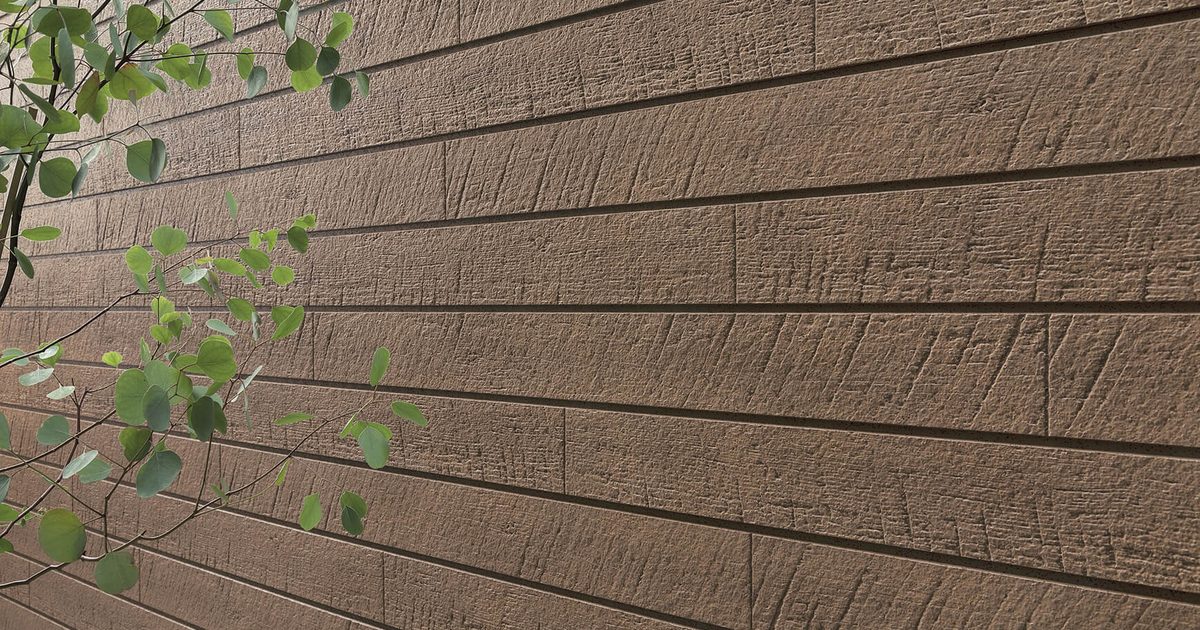
Both KMEW and HPL can form part of high-efficiency ventilated facade systems, but they are built on different product concepts. KMEW uses prefabricated fiber-reinforced cement panels with a relief surface and a concealed installation system. Compact HPL for exterior use is manufactured from layers of cellulose-based fibers and paper, impregnated with heat-resistant resins and pressed at high pressure; it is normally supplied in large formats, which are then machined and adapted to each specific project.
The choice should therefore not be reduced to the question “which panel is better?”. The right question is which material best suits the architecture, the fire-safety strategy, the degree of customisation, the maintenance and the overall economics of the building.
1. Two different materials within the same ventilated-facade logic
The European KMEW manual defines its system as a rainscreen with a drained and ventilated cavity. Panels are fixed with clips, and their rebated edges form concealed overlaps. Filltect is manufactured in 3030 × 455 × 16 mm and Ceradir V in 3000 × 455 × 14 mm, for horizontal or vertical application. [1][2]
Exterior HPL manufacturers also design their panels for ventilated facades. Fundermax, for example, specifies installation on a timber or aluminium subframe, and solutions with visible fixing using rivets/screws or concealed fixing using adhesive systems, depending on the system. [4]
2. Main comparison: KMEW vs exterior HPL
| Criterion | KMEW | Typical exterior HPL |
|---|---|---|
| Base material | Fiber cement: a cementitious matrix reinforced with fibers. Ceradir V declares a mix of cement, silica and organic fibers. [3] | High-pressure compact laminate: cellulose fibers/papers impregnated with thermosetting resins. Trespa and Fundermax describe this composition in similar terms. [5][6] |
| Facade system | Drained and ventilated rainscreen with the minimum cavity defined in the European manual, and fixing clips. [1][2] | Also commonly used as a ventilated facade over a subframe. [4] |
| Format | Narrow, long module: 3000/3030 × 455 mm. A repeatable, controlled facade rhythm. [2][3] | Large boards; Fundermax, for example, offers formats up to 4100 × 1854 mm in several thicknesses. [5] |
| Weight | Ceradir V 14: 20 kg per piece, approximately 14.65 kg/m² according to KMEW. [3] | HPL is usually lighter at common thicknesses: Fundermax declares a density of approx. 1350 kg/m³; 8 mm is roughly 10.8 kg/m². [7] |
| Fixing and appearance | Panels are fixed with original clips, and the installation is invisible. [1][2] | May use visible fixing with rivets/screws, or concealed solutions, depending on the product and system. [4] |
| Joints | Original T-shaped strips 1.2 mm thick are used to join panels in the horizontal plane. The joint is practically imperceptible. | Large-board modulation usually expresses open joints between panels. This can become a deliberate architectural device. |
| Relief / materiality | A strong point: three-dimensional profiles and textures that cast shadow and reproduce wood, stone, brick or other materials with depth. KMEW highlights its forming capability. [8] | A strong point: flat surfaces, colours, finishes, patterns, wood/material effects and custom printing options in certain ranges. [4][9] |
| Special colour / graphics | An industrial range defined by catalogue; the project works within a selection of factory designs and colours. | An HPL advantage: certain manufacturers offer special colours and custom printing, particularly useful for corporate identity and graphics. [4][6] |
| Surface and dirt | Filltect carries a photocatalytic ceramic coating; Ceradir V uses a hydrophilic coating. KMEW states that rain helps remove dirt on Ceradir V. [2][10] | Quality exterior HPL panels are weather- and UV-resistant and are cleaned with water/detergent according to the manufacturer; they normally require no repainting. [4][6] |
| Maintenance | The surface technology can reduce how visibly dirt adheres and the need for manual cleaning, especially in ranges with a self-cleaning function. | Low maintenance and easy cleaning; it is not accurate to present HPL as a high-maintenance material. [4][6] |
| On-site machining | A standardised format and clips can reduce part of the machining on repetitive facade areas, although cuts at junctions and trims still remain. | Great freedom of cutting and machining; it requires panel-layout planning, drilling/milling and tolerances according to the system. Trespa compares its machining to hardwood. [6] |
| Tolerances / movement | Must be designed in accordance with the KMEW manual, maintaining ventilation, subframe tolerances and edge protection according to the series. [2] | Manufacturers warn that dimensions may vary slightly with relative humidity; this must be considered in joints and fixings. [4] |
| Reaction to fire | The cementitious base is favourable for fire-safety strategies. KMEW describes Ceradir V as a “fire-safe” material and its Japanese technical information classifies it as non-combustible; for Spain, the current Euroclass/ETA of the selected product must always be verified. [3][10] | Highly product-dependent. Max Compact Exterior F-Quality is declared B-s2,d0 (some variants B-s1,d0); mineral-core solutions such as m.look reach A2-s1,d0. One should not speak of “HPL” as having a single fire class. [4][5] |
| Localised repair | The 455 mm module can favour localised repairs and limit the area to be replaced; the system’s repair and dismantling procedure must be followed. | In large-board modulation, replacement may involve a piece of greater surface area. The outcome depends on the panel layout and the type of fixing. |
| Architectural image | Closer to a facade of pieces/materials with relief, integrated joints and deep shadows. | Closer to an envelope of large planes, precise geometry and deliberately drawn joints. |
| Best-suited project | Residential, modular, refurbishment, and buildings where materiality, relief, low visibility of fixings and a functional surface are priorities. | Buildings that call for large formats, light weight, bespoke geometries, special colours or a clear expression of the panel layout. |
Note: HPL characteristics vary significantly between manufacturers and ranges. Reaction to fire, the type of fixing, the thickness and dimensional stability in particular must be verified in the documentation of the specific product.
3. KMEW advantages for architects
3.1. Materiality and visual depth
The main aesthetic difference is not simply “fiber cement versus laminate”. KMEW treats the panel as a piece with volume. The relief casts real shadows and makes it possible to reproduce charred wood, stone, brick, concrete or abstract surfaces with a more three-dimensional reading.
HPL offers enormous freedom of colour and graphics, but in many ranges its natural language is that of a relatively flat board. For a project where the architect is looking for depth, shadow and the appearance of a massive material without resorting to real stone or brick, KMEW has a clear advantage.
3.2. Fixing plays a smaller part
The standard KMEW system uses clips and machined overlaps. Across the normal areas of the facade, the fixing sits behind the panel. This lets the texture take the lead. With HPL the fixing can be concealed, but many efficient and common solutions use visible rivets or screws.
3.3. A modulation that can disappear into the design
The 455 mm panel introduces a repeatable modulation, but the textures and rebates can make that modulation read less like a grid of boards. With HPL, the joint between panels is usually visible.
3.4. A fire strategy that follows more intuitively from the nature of the material
For buildings with high reaction-to-fire requirements, the cementitious base of KMEW supports a coherent material strategy. Specification must nevertheless be based on the current Euroclass and ETA/DoP of the specific European product. With HPL it is essential to identify the exact range: a standard compact board with an organic core does not carry the same classification as a mineral-core solution.
3.5. Horizontal and vertical in the same product language
The European KMEW manual covers both horizontal and vertical application for Filltect and Ceradir V. This makes it possible to change the reading direction of the building without leaving the product family. [2]
4. KMEW advantages for developers and construction companies
4.1. A standardised system
For a developer, repeatability can matter more than absolute freedom of format. KMEW combines panel, clips, starter bars, joiners and details defined in the manual. On repetitive or industrialised developments, this logic makes it easier to turn the facade into a repeatable system of supply and installation.
4.2. A surface designed to keep its appearance with less intervention
The commercial advantage of KMEW over HPL should not be framed as “HPL needs maintenance”: quality exterior HPL panels are also low-maintenance products. The difference is that KMEW adds specific surface technologies — photocatalytic or hydrophilic — intended to let rainwater help remove dirt.
4.3. Repair in smaller modules
In the event of localised damage, working with 455 mm pieces can limit the surface that has to be replaced compared with a facade designed with large-format HPL panels. It is a potential advantage in operation and repair, although it must be assessed against the actual panel layout and access to the fixing system.
4.4. Controlling the image across phases of a development
On a phased development, a defined industrial range can simplify repeating the finish and the modulation. Batch control must be maintained, since KMEW warns of possible slight colour variations between manufacturing batches. [2]
4.5. Fire safety as an asset-risk variable
For the developer, reaction to fire is no longer merely a technical figure: it affects approval, insurance, how the asset is perceived and future interventions. With HPL the appropriate variant must be selected explicitly, because within the same category there are panels ranging from class B to mineral A2 solutions. KMEW brings a cementitious base and specific technical documentation; the final decision must be checked against the CTE and the current European classification.
5. When can HPL be the more rational option?
A professional comparison must acknowledge the cases where HPL has clear advantages:
- When the project calls for large-format panels and an architectural grid of large pieces.
- When the self-weight of the cladding is a critical priority; an 8 mm HPL can be appreciably lighter per m² than Ceradir V 14 mm.
- When special shapes, complex cut-outs or freedom of machining from a large board are required.
- When special corporate colours, graphics or individual printing are required that a standard KMEW range does not offer.
6. How to decide between KMEW and HPL
| Project priority | KMEW advantage | HPL advantage |
|---|---|---|
| Deep relief and a wood/stone/brick appearance | Very strong | More dependent on the decor and on a generally flat surface |
| Large formats and freedom of cutting | Limited by the product module | Very strong |
| Barely visible fixing across the facade field | A natural advantage of the clip system | Possible, but system-dependent; visible fixing is common |
| Lower cladding weight | Not its main advantage | A common advantage at HPL facade thicknesses |
| Self-cleaning surface / rain as a cleaning aid | A Filltect / hydrophilic-coating advantage | Easy to clean, but not a generic HPL function |
| Custom colours / printed graphics | Factory range | An HPL advantage in certain brands/ranges |
| Repetitive modulation for housing/modular | Very suitable | Also possible, with more panel-layout work |
| Fire strategy | Cementitious base; verify ETA/Euroclass — A2-s1, d0 | The exact product must be chosen: both B and A2 solutions exist |
| Open joints as an architectural device | Less prominent | Very suitable |
Technical sources
1. KMEW Europe — Technical Information: https://www.kmewglobal.com/europe/technical-information/
2. KMEW — Design/Installation Manual Filltect / Ceradir V for Steel Substructure, European market, September 2025: https://www.kmewglobal.com/europe/assets/pdf/ceradir_v_filltect_tm_for_steel_frame_eu.pdf
3. KMEW — Ceradir V Technical Information: dimensions, weight, composition and properties: https://www.kmew.co.jp/global/ceradirv/technical-information/
4. Fundermax — Exterior panels for facades: https://www.fundermax.com/en/Applications/Exterior%20Apllications/Facades
5. Fundermax — Max Compact Exterior: https://www.fundermax.com/en/Portfolio/Exterior/Max%20Compact%20Exterior
6. Trespa — Frequently Asked Questions: https://www.trespa.com/faqs
7. Fundermax — FAQ: density / weight of compact HPL panels: https://www.fundermax.com/en/Service/FAQ
8. KMEW Europe — Overview / design and formability: https://www.kmewglobal.com/europe/
9. Trespa Meteon — Exterior HPL cladding: https://www.trespa.com/Trespa-meteon
10. KMEW Europe — Ceradir V product: https://www.kmewglobal.com/europe/products/ceradirv/
Methodological note: HPL is a broad category. The table uses representative exterior products from leading manufacturers as its reference. The final performance in a project must be verified against the technical data sheet, DoP/ETA, reaction-to-fire classification and fixing system of the exact product.